The animals
Kelpies and cattle dogs
The two working-dog types you meet on Australian stations, where they come from and how a dog team fits into a horse and dog show.
Book the Katherine show on Viator ↗Quick answer
A working-dog team is the second half of the Katherine show, and it rests on a long station tradition. Wikipedia describes the Australian Kelpie as capable of mustering and droving with little or no guidance, and the Australian Cattle Dog as bred to drive reluctant cattle over rough country. The booking page does not name the breeds in the show, so use this as background, not a promise.
Why a show has dogs at all
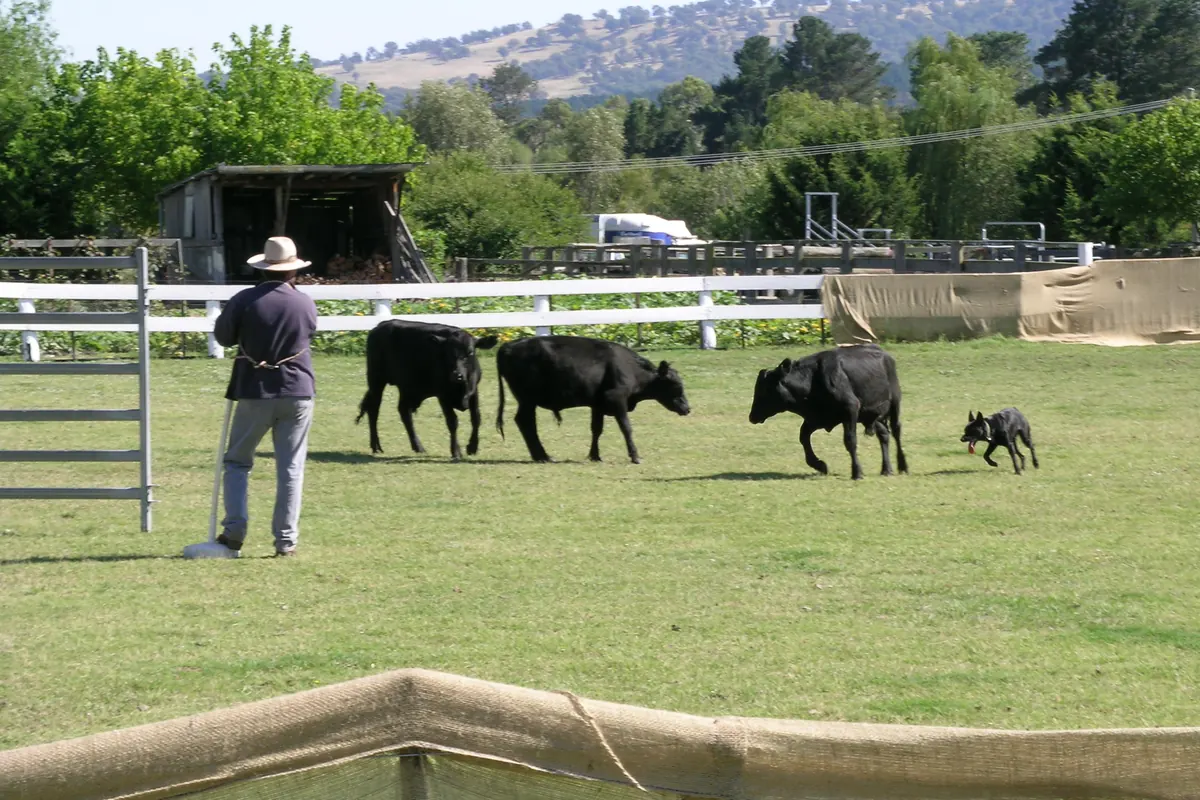
On a cattle or sheep station the work is done by people on horses and by dogs, which is why a station show has both. The booking page lists a working-dog team after the horses, with each dog introduced and trained to work as a team, and the operator says its dogs are trained to muster cattle and sheep for station life. Wikipedia describes a stockman as someone who looks after livestock on a station, traditionally on horseback, and says stockmen traditionally use working dogs and a stockwhip as well as horses.
Read next: Stockmen and ringers
The Kelpie
Wikipedia says the ancestors of most Kelpies were British dogs known loosely as collies, and that the first dog known as a Kelpie was a black and tan pup bought by Jack Gleeson about 1872, from a litter on a station near Casterton. It says the breed was named after the kelpie, a shapeshifting water spirit of Celtic folklore. Working Kelpies are intelligent and easy to train, Wikipedia says, and can save graziers the cost of several hands when mustering. They are often called workaholics, it adds, for their strong drive to herd.
The Australian Cattle Dog
Wikipedia credits Thomas Simpson Hall with early work on the breed in the mid 1800s, bred to move cattle over long distances. It says he bred blue speckled Highland collies with dingoes, and that the names Red Heeler and Blue Heeler come from the coat colours and from moving reluctant cattle by nipping at their heels. The article describes a high-energy dog that works quietly and is reserved with strangers. If you watch a dog team, a quiet worker nipping at heels is a cattle-dog habit.
What to watch for in the arena
You will not need to know the breeds to enjoy the dogs, but a few things are worth watching. Notice how each dog responds to its handler's voice and how the team splits to cover ground. Wikipedia says Kelpies block stock from moving away from the stockman, which is useful in rough country. The operator's own description says the dogs are trained to work as a team, and the booking page says each is introduced, so the show gives you time to learn their names and styles.
- How each dog is introduced and what it is asked to do
- How the team splits to cover ground
- How a dog responds to voice and signal
Dogs and horses together
The show puts the two halves side by side: a young horse learning to carry a saddle, and dogs that already know their job. The operator says the team explains the thinking behind the training and that it rests on a relationship built on trust. Wikipedia describes liberty work with horses as working a loose horse in a small area with only a whip or rope, teaching it to respond to the handler's voice and body language. That is a close cousin of how a dog is asked to work stock.
Pats, photos and manners
The operator says guests are invited to pat and feed some station animals, and that the show ends with a chance to chat with the team. The booking page does not list animal feeding, so treat it as likely rather than guaranteed. Working dogs are not pets: Wikipedia calls the Cattle Dog reserved with people it does not know and protective of its owners. Follow the team's instructions about when to approach an animal, and keep children close, because dogs and horses are working in the arena.
Frequently asked questions
Which dog breeds are in the show?
The booking page does not name them. Kelpies and Australian Cattle Dogs are the two working types most often seen on Australian stations, so expect something like them but do not count on it.
Can I pat the dogs?
The operator says guests are invited to pat and feed some station animals. The booking page does not list it, so ask the team on the day and follow their instructions.
Are the dogs trained for sheep or cattle?
The operator says its dogs are trained to muster cattle and sheep for station life. On a northern cattle station the work is mostly cattle.
Sources